





Magnesium Sulphate Fertilizer: Benefits, Uses & Application Guide
Magnesium sulphate fertilizer is an important source of magnesium and sulphur for crops, especially when plants show signs of magnesium deficiency or when soil conditions limit magnesium availability. Magnesium is essential for chlorophyll formation and normal photosynthesis, while sulphur contributes to protein and enzyme formation.
For growers, the practical value of magnesium sulphate is its water solubility and flexibility. Depending on the formulation and crop requirement, it can fit into soil application, fertigation and foliar nutrition programs. This guide explains what magnesium sulphate does, how to recognize magnesium deficiency, where it can be useful and how to use it as part of a balanced crop-nutrition plan.
What Is Magnesium Sulphate Fertilizer?
Magnesium sulphate is a fertilizer material that supplies two plant nutrients: magnesium and sulphur. Agricultural products are available in different grades and concentrations, so the guaranteed analysis on the specific product should always be checked before deciding a dose.
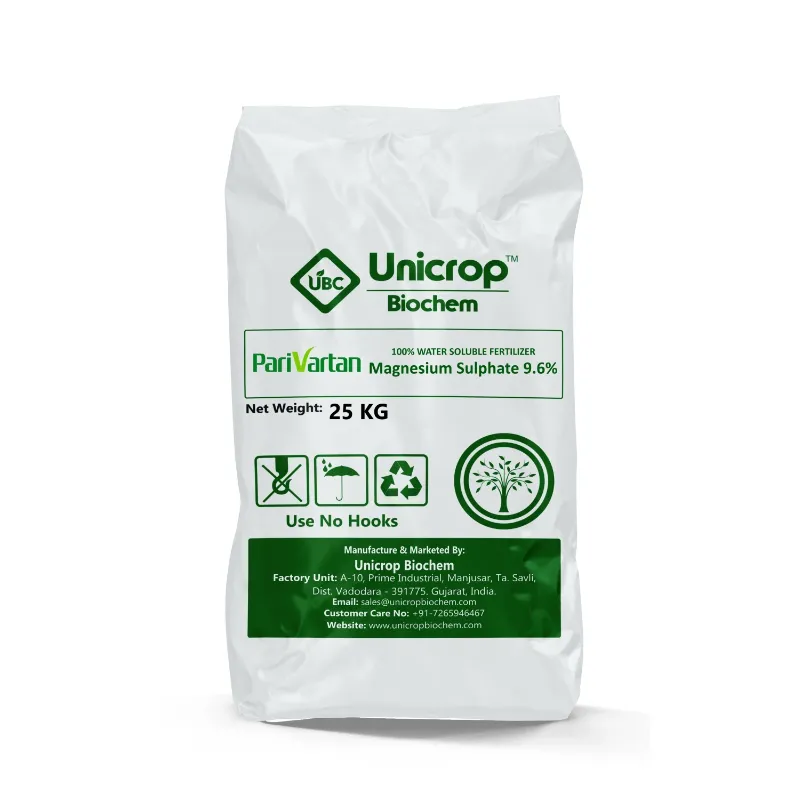
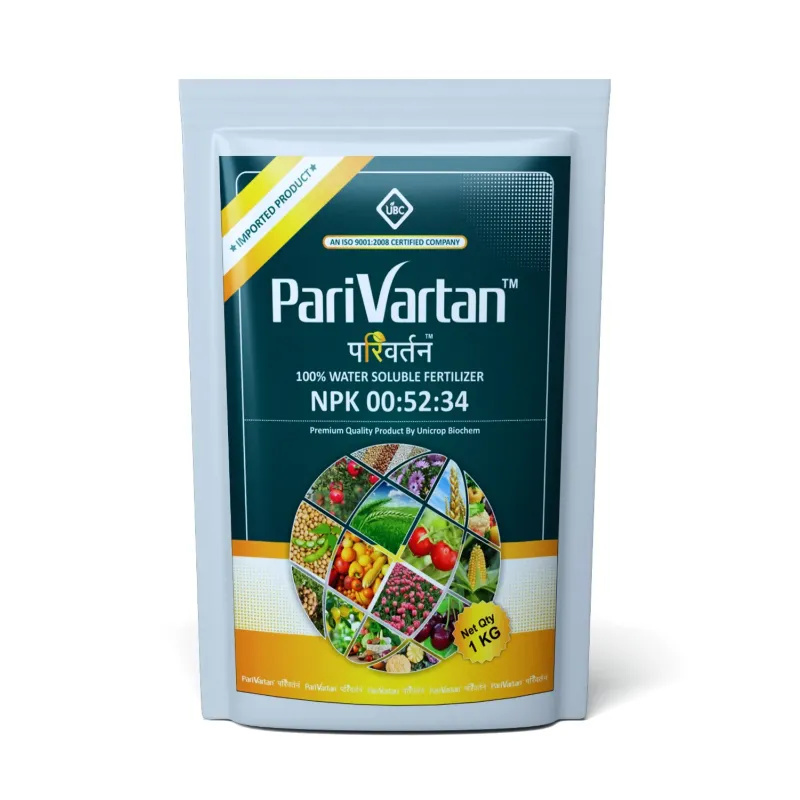
Unicrop Biochem lists Magnesium Sulphate 9.6% within its crop-nutrition portfolio. Product selection should be based on crop need, soil or tissue analysis, application method and the rest of the fertilizer program.
Why Magnesium Is Important for Plants
Magnesium is a secondary plant nutrient, but its role is fundamental. It is located at the center of the chlorophyll molecule, making it directly connected with a plant's ability to capture light and carry out photosynthesis.
Supports Chlorophyll Formation
When magnesium is adequate, leaves are better able to maintain normal green pigmentation and photosynthetic activity. A shortage can reduce the plant's ability to produce energy efficiently.
Supports Enzyme Activity
Magnesium is involved in many enzyme-driven processes inside plants. These processes influence energy transfer, carbohydrate metabolism and normal crop development.
Supports Nutrient Balance
Crop nutrition works as a system. Magnesium needs to remain in balance with nutrients such as potassium, calcium and nitrogen. Applying one nutrient excessively can sometimes reduce the uptake of another, which is why balanced fertilization is important.
Why Sulphur Matters in Crop Nutrition
Magnesium sulphate also supplies sulphur. Sulphur supports amino-acid and protein formation and contributes to several metabolic processes inside the plant.
Crop demand for sulphur varies by species, expected yield, soil organic matter, irrigation and previous fertilizer use. Magnesium sulphate can be useful when both magnesium and sulphur are required, but it should not be treated as a complete fertilizer because it does not provide all essential crop nutrients.
Common Magnesium Deficiency Symptoms
Magnesium is mobile within plants. When supply becomes inadequate, the plant can move magnesium from older leaves toward younger tissues. For this reason, deficiency symptoms commonly appear first on older or lower leaves.
Interveinal Chlorosis
One of the most recognizable symptoms is yellowing between leaf veins while the veins remain comparatively green. This pattern often starts on mature leaves.
Progressive Leaf Damage
If the deficiency continues, yellow areas can become more severe and may develop brown or necrotic patches. Older leaves can lose function prematurely.
Reduced Crop Vigor
Severe or prolonged magnesium deficiency can reduce photosynthetic capacity, root activity and overall crop performance. Symptoms alone should not be used as the only diagnosis because other nutrient problems, root damage or soil conditions can sometimes look similar.
What Can Cause Magnesium Deficiency?
A crop may become magnesium deficient even when some magnesium is present in the soil. Availability and uptake depend on several interacting factors.
- Low available magnesium in the root zone.
- Light or sandy soils where nutrients can be more easily leached.
- Acidic soils with low exchangeable magnesium.
- High crop demand during rapid growth.
- Very high potassium levels that interfere with magnesium uptake.
- Root damage, poor drainage or other conditions that limit nutrient absorption.
- Unbalanced fertilizer programs that focus heavily on NPK while overlooking secondary nutrients.
Soil and tissue testing can help distinguish an actual magnesium shortage from other problems before corrective fertilizer is applied.
Key Benefits of Magnesium Sulphate Fertilizer
When a crop genuinely needs magnesium or sulphur, magnesium sulphate can offer several practical benefits.
- Supplies magnesium in a water-soluble form.
- Provides sulphur alongside magnesium.
- Can support chlorophyll formation and photosynthesis.
- Can help correct diagnosed magnesium deficiency.
- Fits into soil, fertigation or foliar programs when the product is suitable for that method.
- Can complement NPK fertilizers in a more balanced nutrition plan.
- Is useful in many vegetable, fruit, field and protected-cultivation systems.
How to Use Magnesium Sulphate Fertilizer
The correct application method depends on the product grade, crop, growth stage, soil conditions and existing nutrition program. There is no single universal dose that should be copied across every formulation.
Soil Application
Soil application can be appropriate where testing indicates low magnesium in the root zone. The fertilizer can be incorporated or applied according to the specific product recommendation and irrigation program.
Fertigation and Drip Irrigation
Water-soluble magnesium sulphate can be used in fertigation where the formulation is suitable for drip systems. Dissolve the material completely, maintain adequate filtration and check compatibility with other fertilizers before preparing concentrated stock solutions.
Foliar Application
Foliar magnesium can be useful when a standing crop needs a relatively quick magnesium correction. Use only the concentration recommended for the specific product and crop. Excessive concentration can damage foliage, so a general dose should not be assumed across all products.
Magnesium Sulphate for Tomato and Vegetable Crops
Tomato and other intensively managed vegetables can develop magnesium deficiency when crop demand is high or the nutrient balance in the root zone is unfavorable. Typical symptoms include interveinal yellowing on older leaves while the main veins stay greener.
Before applying magnesium sulphate, check whether the crop is receiving heavy potassium fertilization, whether the root zone is functioning properly and whether the symptoms match a confirmed magnesium shortage. Correcting the actual cause is more effective than simply adding fertilizer whenever leaves turn yellow.
Magnesium Sulphate for Fruit Crops
Fruit crops depend on a healthy leaf canopy to support flowering, fruit development and carbohydrate production. Magnesium deficiency can reduce leaf efficiency and may become more noticeable during periods of high crop demand.
In orchards and vineyards, application decisions should consider soil testing, irrigation-water quality, existing potassium and calcium levels, previous fertilizer history and leaf or tissue analysis where available.
Magnesium Sulphate vs. Dolomitic Lime
Both can supply magnesium, but they are used for different agronomic purposes.
| Input | Main Use | Key Consideration |
|---|---|---|
| Magnesium sulphate | Soluble magnesium and sulphur nutrition | Useful when magnesium is needed without substantially raising soil pH |
| Dolomitic lime | Soil acidity correction plus calcium and magnesium | More appropriate when liming is also needed |
The right choice depends on soil pH as well as magnesium status. Applying lime only to supply magnesium is not always appropriate if the soil does not need a pH increase.
Compatibility and Mixing Precautions
Water-soluble fertilizers should be mixed carefully, particularly in concentrated stock solutions. Before combining magnesium sulphate with other fertilizers, check product compatibility and perform a small jar test when needed.
In fertigation systems, precipitation can block emitters and reduce nutrient availability. Separate stock tanks may be required for combinations that are not chemically compatible at high concentration.
Common Mistakes to Avoid
Magnesium sulphate is most effective when it addresses a real crop requirement. Avoid these common mistakes:
- Treating every yellow leaf as magnesium deficiency: nitrogen, iron, disease, root stress and other factors can produce yellowing.
- Applying magnesium without testing: unnecessary fertilizer adds cost and can upset nutrient balance.
- Ignoring potassium levels: excessive potassium can interfere with magnesium uptake.
- Using one dose for every formulation: product concentrations and application methods differ.
- Mixing fertilizers without checking compatibility: concentrated solutions can react or form precipitates.
- Expecting magnesium sulphate to replace complete nutrition: crops still require balanced macro- and micronutrients.
How to Get Better Results
A magnesium program should be built around diagnosis rather than routine application. Start with soil or tissue information where possible, identify the crop stage and review the complete fertilizer schedule.
For better results:
- Confirm that symptoms are consistent with magnesium deficiency.
- Check soil pH and magnesium status.
- Review potassium, calcium and ammonium inputs for possible nutrient competition.
- Choose a magnesium source that fits the soil and application method.
- Use the product-specific rate rather than a generic dose.
- Monitor new growth after correction instead of expecting damaged old leaves to become completely normal.
Why Choose Unicrop Biochem Magnesium Sulphate?
Unicrop Biochem offers Magnesium Sulphate 9.6% as part of its fertilizer and crop-nutrition range. Growers, dealers and bulk buyers can use the product specification together with soil conditions, crop demand and application method to build a suitable nutrition program.
For specifications, packaging, bulk availability and application guidance, contact Unicrop Biochem before finalizing a large-scale crop program.
Frequently Asked Questions
1. What is magnesium sulphate fertilizer used for?
It is used mainly to supply magnesium and sulphur to crops and to help correct magnesium deficiency where the shortage has been properly diagnosed.
2. What does magnesium deficiency look like?
A common symptom is yellowing between the veins of older leaves while the veins remain greener. Severe deficiency can later produce brown or dead areas.
3. Can magnesium sulphate be used through drip irrigation?
Yes, when the specific formulation is water soluble and suitable for fertigation. Good filtration and fertilizer compatibility should be checked.
4. Can magnesium sulphate be sprayed on leaves?
Suitable products can be used as foliar magnesium sources. Follow the product-specific concentration and crop recommendation rather than using a universal spray rate.
5. Is magnesium sulphate the same as a complete fertilizer?
No. It supplies magnesium and sulphur but does not provide all the essential nutrients a crop needs.
6. Can high potassium cause magnesium deficiency?
Very high potassium availability can compete with magnesium uptake in the root zone. This is one reason balanced nutrient management is important.
7. Should magnesium sulphate be applied to every crop?
No. It should be used when crop demand, soil conditions, product recommendations or diagnostic testing indicate a need for magnesium or sulphur.
Conclusion
Magnesium sulphate fertilizer can be a valuable part of crop nutrition when plants genuinely need magnesium and sulphur. It supports chlorophyll formation, photosynthesis and several important metabolic functions, while its water solubility makes it flexible for different application systems.
The key is accurate diagnosis. Soil conditions, nutrient balance, crop stage and the complete fertilizer program should be considered before application. Used correctly, magnesium sulphate can help growers maintain healthier crop nutrition without unnecessary or excessive fertilizer use.
Need Magnesium Sulphate for farm, dealer or bulk supply? Contact Unicrop Biochem for product specifications, availability, packaging and technical guidance.