



Zinc Sulphate Fertilizer: Benefits, Uses & Application Guide
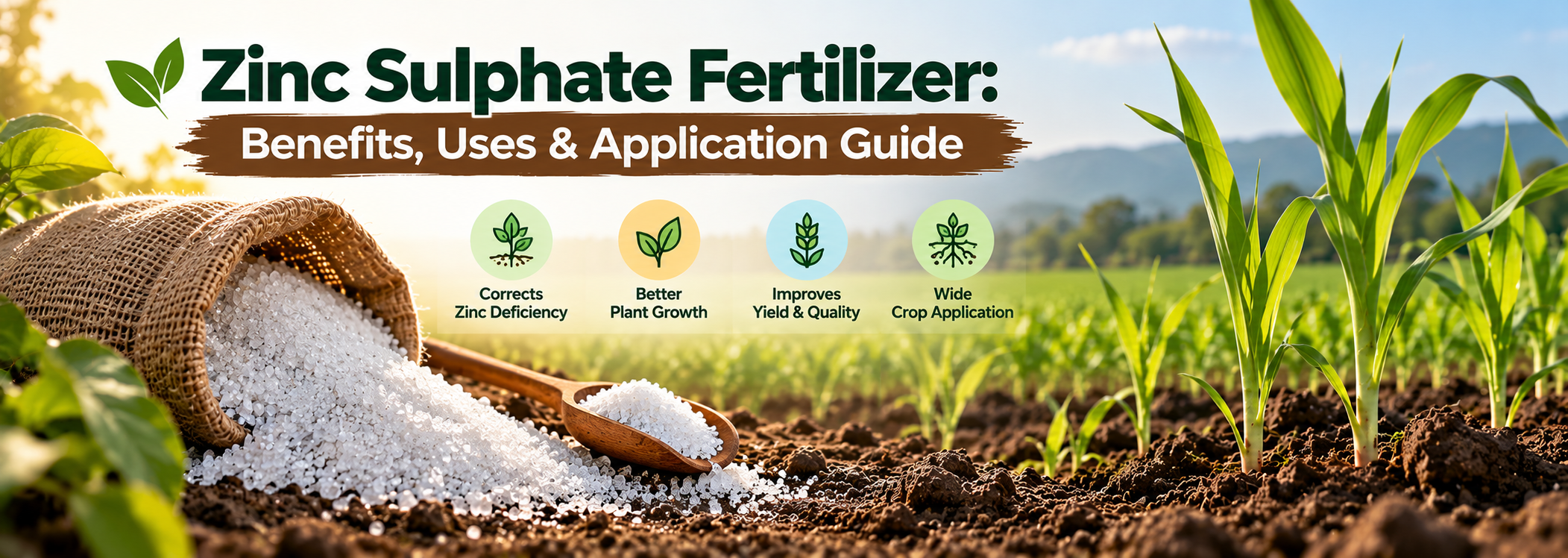
Zinc sulphate fertilizer is widely used to correct zinc deficiency and support healthy crop development, especially in soils where available zinc is low. Zinc is required in small quantities, but its role in enzyme activity, growth regulation, chlorophyll development and reproductive performance makes it an important micronutrient for many crops.
For farmers and crop advisers, the main challenge is not simply deciding whether to use zinc. The more important questions are when zinc is actually needed, how to recognize a likely deficiency, which application method fits the crop and how zinc sulphate should be integrated into a balanced fertilizer plan.
This guide explains the role of zinc, common deficiency symptoms, soil and foliar application options, practical precautions and where Unicrop Biochem's Zinc Sulphate 33% can fit into a micronutrient-management program.
What Is Zinc Sulphate Fertilizer?
Zinc sulphate is a water-soluble source of zinc and sulphur used in agriculture to supply zinc where soil availability or crop uptake is inadequate. Different commercial grades are available, so growers should always check the guaranteed analysis and product directions rather than assuming every zinc sulphate formulation has the same concentration.
Zinc is a micronutrient, which means plants need it in much smaller amounts than nitrogen, phosphorus or potassium. Even so, a shortage can affect crop growth, leaf development, flowering and yield potential.
Why Zinc Is Important for Plants
Zinc participates in many biochemical processes inside the plant. Its effects are often most visible in actively growing tissues because zinc supports normal growth regulation and enzyme activity.
Supports Enzyme Activity
Zinc acts as a component or activator of several plant enzymes. These enzymes are involved in growth, carbohydrate metabolism and other essential physiological processes.
Supports Growth Regulation
Zinc contributes to normal plant growth regulation. When zinc is deficient, plants may become stunted, internodes can shorten and leaves may remain smaller than normal.
Supports Chlorophyll and Leaf Function
Adequate zinc nutrition supports normal leaf development and photosynthetic activity. Zinc-deficient plants may show chlorosis or pale areas, although visual symptoms can sometimes overlap with other nutrient disorders.
Supports Reproductive Development
Zinc also contributes to flowering, pollen development and other reproductive processes. This makes it relevant not only during vegetative growth but also as part of the crop's overall micronutrient balance.
Common Zinc Deficiency Symptoms in Crops
Zinc deficiency can appear differently between crops, but several symptoms are commonly associated with low zinc availability.
- Small or narrow leaves.
- Shortened internodes and a compact or rosette-like appearance.
- Interveinal chlorosis or pale bands on leaves.
- Slow or uneven crop growth.
- Reduced tillering or branching in some crops.
- Poor development of young tissues.
- Reduced flowering or reproductive performance where deficiency is severe.
Visual diagnosis should be treated carefully. Iron, manganese, nitrogen, root stress, disease and soil problems can produce similar symptoms. Soil testing, tissue analysis and field history can help confirm whether zinc is actually the limiting factor.
Why Zinc Deficiency Happens
A crop can become zinc deficient even when the total amount of zinc in the soil is not extremely low. The key issue is whether enough zinc is available to plant roots.
High Soil pH
Zinc availability commonly decreases as soil pH becomes more alkaline. In high-pH soils, zinc can become less soluble and therefore less accessible to roots.
High Phosphorus Levels
Very high phosphorus application can sometimes contribute to zinc imbalance. This does not mean phosphorus should be avoided; it means the nutrient program should remain balanced.
Low Organic Matter
Soils with poor organic matter and weak biological activity may have lower micronutrient buffering and availability.
Cold or Wet Soil Conditions
Cool, waterlogged or poorly aerated root zones can limit root activity and reduce nutrient uptake even when zinc is present.
Sandy or Highly Weathered Soils
Some light-textured or strongly weathered soils may contain low available zinc and can require targeted micronutrient management.
Key Benefits of Zinc Sulphate Fertilizer
When zinc deficiency is confirmed or likely, zinc sulphate can offer several practical advantages.
- Supplies zinc in a soluble form.
- Can help correct zinc deficiency.
- Supports normal leaf and shoot development.
- Supports enzyme and metabolic activity.
- Can complement NPK and secondary-nutrient programs.
- Can be used through suitable soil or foliar programs depending on formulation.
- Also supplies sulphur as part of the compound.
How to Apply Zinc Sulphate Fertilizer
The correct method depends on the crop, soil test, severity of deficiency, product concentration and production system. A single universal dose should not be copied across every crop or formulation.
Soil Application
Soil application is useful when the objective is to improve zinc availability in the root zone. Zinc sulphate may be incorporated into soil or applied with other compatible fertilizers according to product guidance.
Soil application can provide a more sustained correction where the underlying problem is low zinc availability in the field.
Foliar Application
Foliar zinc can provide a quicker route into the plant when a standing crop shows deficiency symptoms. Use only the product-specific dilution and crop recommendation, because excessive concentrations can cause leaf injury.
Foliar feeding is usually best viewed as a targeted corrective tool rather than a replacement for long-term soil management where the soil itself is zinc deficient.
Fertigation
Where the product is fully water soluble and approved for fertigation, zinc can be supplied through irrigation systems. Compatibility should be checked before preparing concentrated fertilizer solutions, and good filtration should be maintained.
Zinc Sulphate for Field Crops
Zinc is especially important in many cereals, pulses and commercial crops. In field crops, deficiency can reduce early vigor, tillering, leaf expansion and overall crop uniformity.
For crops grown repeatedly on the same land, zinc removal and soil conditions should be considered as part of the long-term nutrient plan. Routine application should still be based on actual need rather than habit.
Zinc Sulphate for Vegetable Crops
Vegetables can respond quickly to micronutrient imbalance because they often have rapid growth and high productivity targets. Zinc deficiency may appear as small leaves, poor shoot development or chlorosis.
Before correcting the crop, check irrigation, soil pH, root health and the balance of other nutrients. In high-value vegetable systems, tissue testing can be particularly useful for confirming the problem.
Zinc Sulphate for Fruit Crops
Fruit trees and vines depend on healthy vegetative growth to support flowering and fruit production. Zinc deficiency may reduce shoot extension and leaf size and can interfere with normal reproductive development.
In perennial crops, zinc management should consider both the current season and the longer-term condition of the orchard soil. Correcting the root-zone problem can be more important than repeatedly treating symptoms alone.
Zinc Sulphate vs. Chelated Zinc
Zinc sulphate and chelated zinc can both supply zinc, but they behave differently in fertilizer programs.
| Zinc Source | Typical Strength | Practical Consideration |
|---|---|---|
| Zinc sulphate | Concentrated inorganic zinc source | Cost-effective for many soil and foliar programs when used correctly |
| Chelated zinc | Zinc bound to a chelating agent | Can remain more available in some difficult soil or solution conditions |
The best source depends on soil pH, application method, crop value, fertilizer compatibility and the severity of the deficiency. Unicrop Biochem also lists Chelated Zinc 12% EDTA as an alternative zinc source for programs where a chelated form is preferred.
Compatibility and Mixing Precautions
Micronutrient fertilizers should be mixed carefully, especially in concentrated stock solutions. Before combining zinc sulphate with other inputs, check product compatibility and perform a small jar test when appropriate.
Water quality, solution pH and fertilizer concentration can affect whether a mixture remains stable. If precipitation or cloudiness develops, the products should not be combined in the same concentrated tank without technical guidance.
Common Mistakes to Avoid
Zinc is essential, but excessive or poorly targeted application is not beneficial. Avoid these common mistakes:
- Treating every chlorotic leaf as zinc deficiency: several nutrient and root problems can look similar.
- Ignoring soil pH: alkaline conditions can reduce zinc availability.
- Applying more zinc than needed: micronutrients have a narrower safe range than many macronutrients.
- Using the same dose for every product: zinc concentration and formulation vary.
- Mixing without checking compatibility: concentrate reactions can reduce effectiveness or block equipment.
- Using foliar correction as a permanent solution: repeated symptoms may indicate a root-zone or soil problem.
How to Get Better Results from Zinc Fertilization
Good zinc management starts with diagnosis and nutrient balance.
- Review crop symptoms and field history.
- Check soil pH and available zinc where testing is possible.
- Use tissue analysis for high-value crops when diagnosis is uncertain.
- Choose the zinc source that fits the application system.
- Follow the product-specific dose and dilution.
- Monitor new growth after correction.
- Review the complete fertilizer plan, including phosphorus and other micronutrients.
Why Choose Unicrop Biochem Zinc Sulphate 33%?
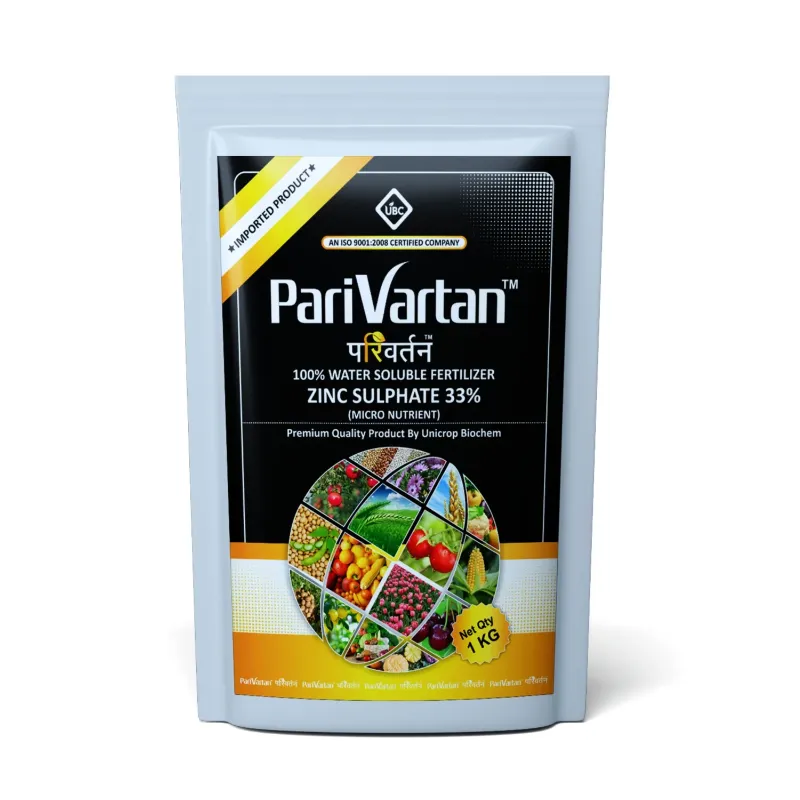
Unicrop Biochem offers Zinc Sulphate 33% as part of its crop-nutrition and micronutrient portfolio. For growers, dealers and bulk buyers, the product can be integrated into soil and crop-management programs where zinc supplementation is required.
For product specifications, packaging, bulk availability and crop-specific application guidance, contact Unicrop Biochem before finalizing a large-scale zinc program.
Frequently Asked Questions
1. What is zinc sulphate fertilizer used for?
It is mainly used to supply zinc and help correct zinc deficiency in crops. It also contributes sulphur.
2. What are the main symptoms of zinc deficiency?
Common signs include small leaves, shortened internodes, poor growth and chlorosis. Symptoms vary by crop and should be confirmed where possible.
3. Can zinc sulphate be sprayed on leaves?
Suitable zinc sulphate formulations can be used as foliar treatments. Always follow the product-specific dilution and crop recommendation.
4. Can zinc sulphate be applied to soil?
Yes. Soil application is commonly used where the root zone has low available zinc and a longer-term correction is needed.
5. Is zinc sulphate suitable for alkaline soil?
Zinc deficiency is common in alkaline soils because zinc availability can decrease at higher pH. The best source and application method should be chosen according to local soil conditions.
6. Is zinc sulphate the same as chelated zinc?
No. Both supply zinc, but chelated zinc is bound to a chelating agent and may behave differently in soil and nutrient solutions.
7. Should zinc be applied every season?
Not automatically. Application should be based on crop demand, soil conditions, previous response and diagnostic information.
Conclusion
Zinc sulphate fertilizer is a practical micronutrient source for crops affected by low zinc availability. It can support normal growth, enzyme activity, leaf development and reproductive performance when zinc is genuinely limiting.
The best results come from accurate diagnosis and balanced nutrition. Soil pH, phosphorus levels, root health, application method and product concentration should all be considered before zinc is applied.
Need Zinc Sulphate 33% for farm, dealer or bulk supply? Contact Unicrop Biochem for specifications, packaging, availability and technical guidance.