



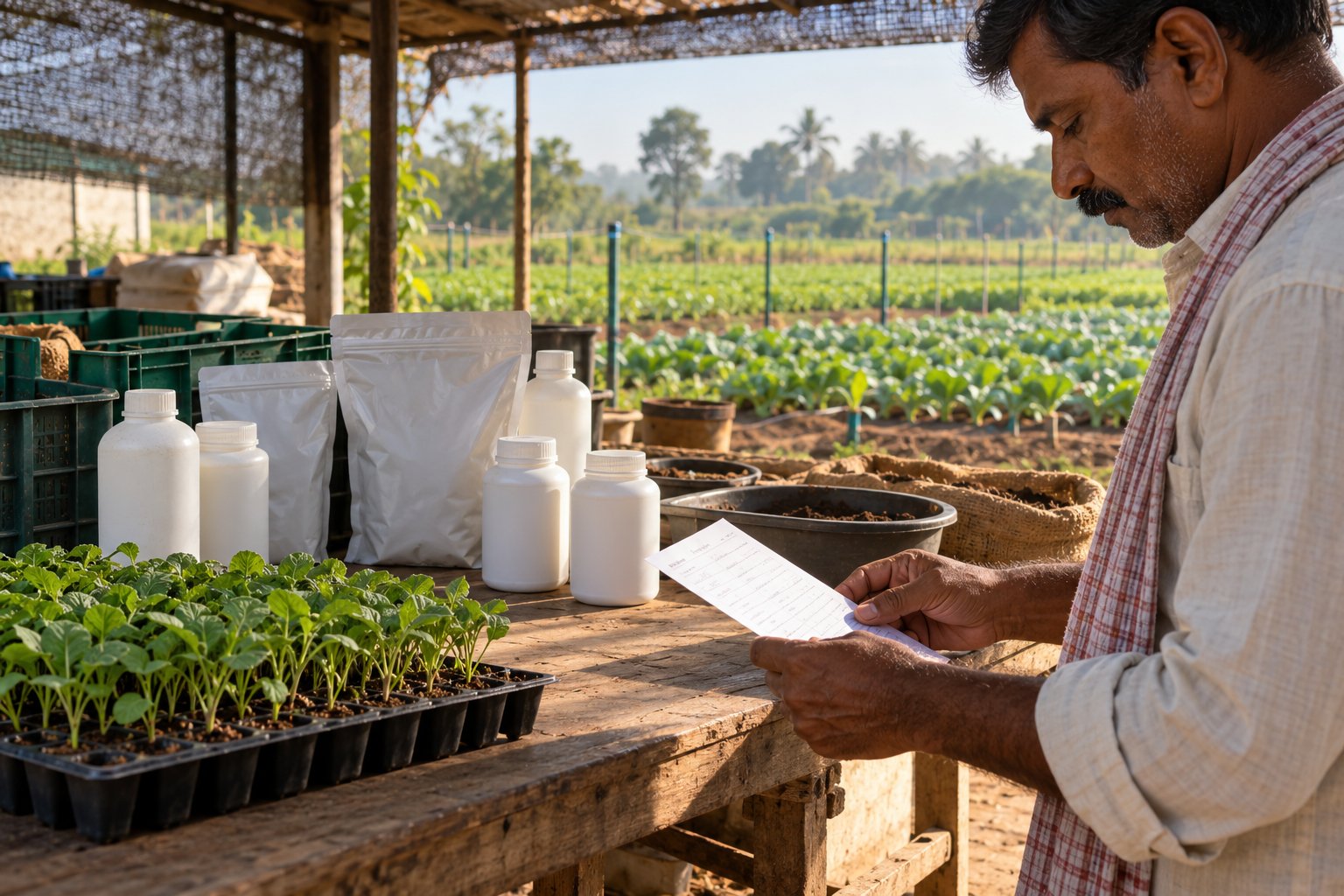
A bottle of biofertilizer deserves attention before it reaches the field. Biofertilizer storage and application begin with checking the pack, understanding the intended crop and planning the job. This guide helps farmers and dealers turn those checks into a repeatable routine, from receiving stock to recording an application.
Why handling deserves a place in your farm plan
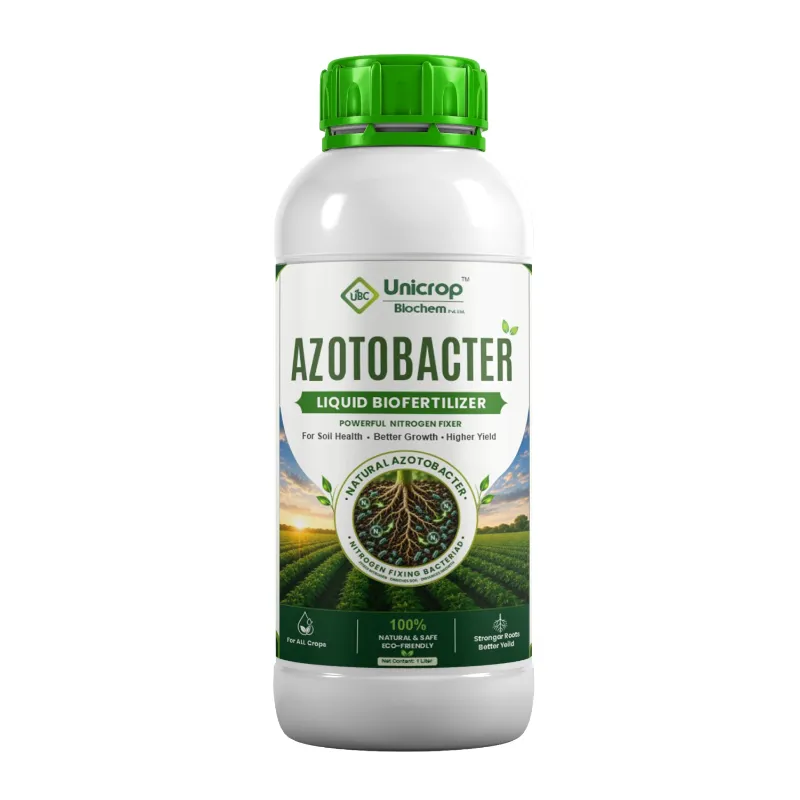
Biofertilizers contain beneficial microorganisms. They differ from products that simply supply a measured quantity of mineral nutrients. Tamil Nadu Agricultural University describes biofertilizers as living preparations and recommends protecting them from heat and direct sunlight. The product label should guide storage, crop selection and use.
Think of a purchase as two decisions: which product fits the crop, and whether you can handle it as instructed. Buying a suitable inoculant is only the first step. A clear plan makes it easier to avoid forgotten stock and rushed applications.
Biofertilizer storage and application: start with the label
Before accepting a delivery, photograph the label and keep the invoice. These records make follow-up questions easier to answer.
Check the details before buying
Look for the manufacturer, product name, batch number, manufacture and expiry dates, intended crops and instructions. If important details are missing or unreadable, ask the supplier to clarify them before purchase. Do not choose only by bottle size or price.
Choose a suitable storage location
Follow the stated storage conditions. General university guidance recommends a cool, dry place away from direct sun and heat. Arrange stock so expiry dates can be read easily. Check the label before assuming a product needs refrigeration or that a single temperature suits every formulation.
Plan stock use around expiry
Use products within their expiry date. A useful dealer routine is to place the earliest-expiring stock where it will be picked first. Farmers can write the planned application date beside each batch in a notebook. Order quantities that fit the coming crop programme instead of keeping an unplanned surplus.
Build a crop-specific application checklist
Application methods vary between products. Seed treatment, root dipping and soil application are established approaches, but a method used for one formulation should not automatically be transferred to another.
| Decision | Question to resolve | Record to keep |
|---|---|---|
| Crop suitability | Does the label name this crop or use? | Crop and variety |
| Application route | Is the product intended for seeds, roots or soil? | Selected method |
| Quantity | What dose and dilution does this formulation require? | Product quantity and treated area |
| Timing | At what stage should it be used? | Planned and actual dates |
| Other inputs | Has compatibility been confirmed? | Supplier or adviser instructions |
A practical Unicrop product example
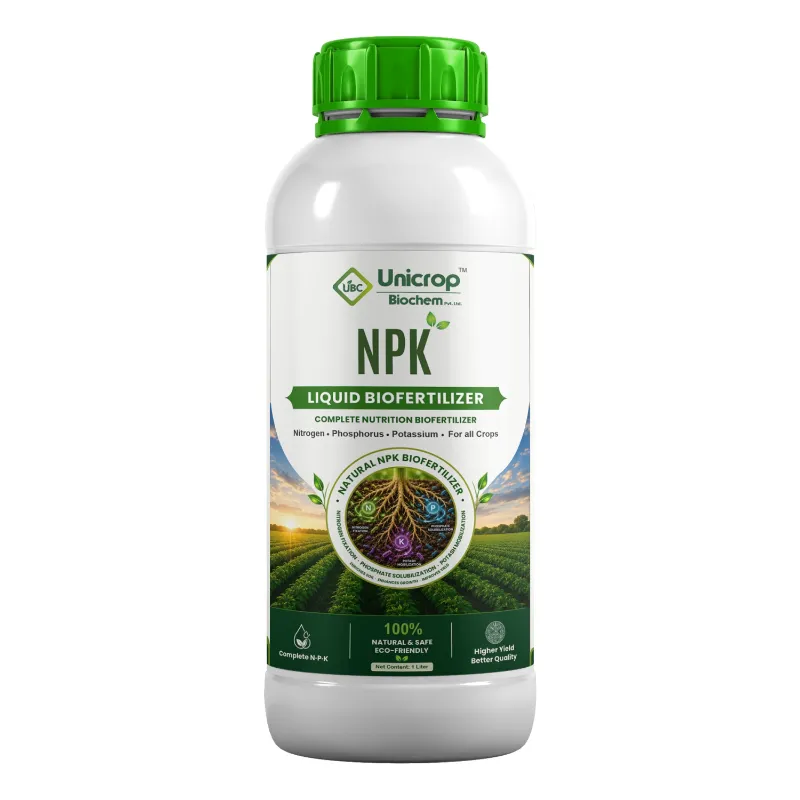
The UNI NPK LIQUID product page describes a multi-microbial formulation containing Azotobacter chroococcum, Bacillus megaterium and Frateuria aurantia. It lists soil application through drip irrigation or drenching at 1–2 litres per acre and advises using moist soil and clean equipment while avoiding bactericidal mixtures. Confirm the current pack instructions and crop-specific advice before use; this rate should not be copied to other Unicrop products.
When asking for guidance, share the crop, acreage, growth stage, irrigation method and other planned inputs. Those details are more useful than asking for a general dose without naming the formulation.
Keep the workflow simple on application day
A short written job sheet can prevent avoidable confusion when several people work on the same farm.
- Match the product and batch to the job sheet.
- Read the current instructions before measuring.
- Prepare the equipment required for the approved application route.
- Resolve questions about dilution, timing and other inputs before starting.
- Record what was actually applied, where and when.
For seed treatments, follow the crop and formulation instructions rather than improvising a soaking period. University guidance includes shade drying and prompt sowing for its described treatments. If chemically treated seed is involved, request the correct sequence and interval from the supplier or agricultural adviser.
Mixing precautions and realistic expectations
Using several inputs in one operation may seem convenient, but convenience does not establish compatibility. UNI NPK LIQUID specifically cautions against mixing with bactericidal chemicals. If a proposed mixture has no clear instructions, obtain confirmation before preparing it.
A useful question is: “Can this exact product be used with this exact input by this method?” Write down the answer and its source. Keep the wider nutrient programme based on crop requirements and soil-test advice. Biofertilizers can supplement nutrition; a purchase should not trigger an automatic decision to stop other recommended fertilizers.
For your own farm records, note weather, irrigation, visible crop condition and the other inputs used. If comparing treated and untreated areas, keep management as similar as practical. One observation should lead to better questions, rather than a promise that every field will respond identically.
Frequently asked questions
1. How should biofertilizers be stored?
Use the conditions printed on the pack. General university guidance recommends a cool, dry place protected from sunlight and heat.
2. Do all biofertilizers have the same shelf life?
Use the expiry date for the specific batch. Do not assume that another brand or formulation has the same storage requirements or usable life.
3. Can I use an expired product?
Plan applications within the labelled expiry period. Ask the manufacturer how to handle expired stock instead of applying it as if it were current.
4. Can every liquid biofertilizer be applied through drip?
Check the product's approved route. UNI NPK LIQUID lists drip irrigation and soil drenching, but that does not establish instructions for every liquid product.
5. Can I mix biofertilizer with another farm input?
Confirm compatibility for the exact combination. Avoid assuming that products are compatible because they are used on the same crop.
6. What should I tell Unicrop when requesting advice?
Share the product name, crop, area, growth stage, irrigation system and planned inputs. Include a label photograph if a dose or storage instruction is unclear.
Conclusion: prepare before the pack is opened
Good handling starts with a suitable product, readable instructions and a realistic application schedule. Check the batch, plan the job and keep a brief record. For product selection and application guidance, explore UNI NPK LIQUID from Unicrop Biochem and use the inquiry option on its page to discuss your crop requirements.